Dishcloth, bookmark or pouch: which little project fits your next step?
Compare three kinds of small cotton projects by stitch repetition, fabric thickness and finishing, rather than by their appearance alone.
Look at the construction before the photograph
A small project is not automatically a simple one. A tiny flower can require more stitch types and more exact placement than a larger plain rectangle. When choosing your next make, read the stitch list, turning-chain rule and finishing steps before judging difficulty from the image.
Our dishcloth, bookmark and envelope pouch share a useful foundation: rows of single crochet. They put that foundation to different uses. Comparing them helps you choose a skill to practice instead of collecting supplies for several projects at once.
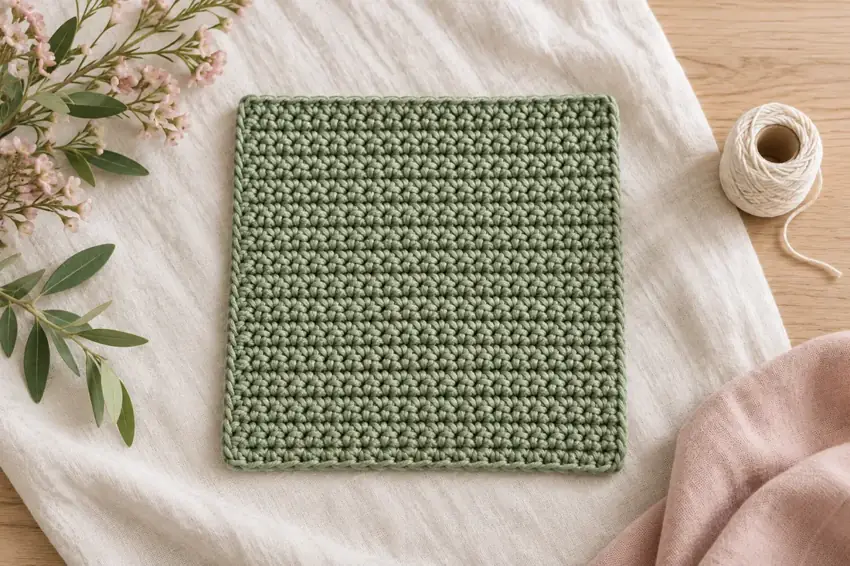
Choose a dishcloth for repeated rows and readable edges
The plain cotton dishcloth keeps its stitch count the same from the first row to the last. There is no separate border and no assembly. That makes it a useful setting for noticing edge stitches, maintaining similar loops and recording a simple row count.
Choose smooth cotton and check the yarn label for care. The target size depends on gauge rather than a fixed hook size alone. You can accept a different dimension for a practice cloth, but make that choice deliberately and keep the fabric suitable for its intended use.
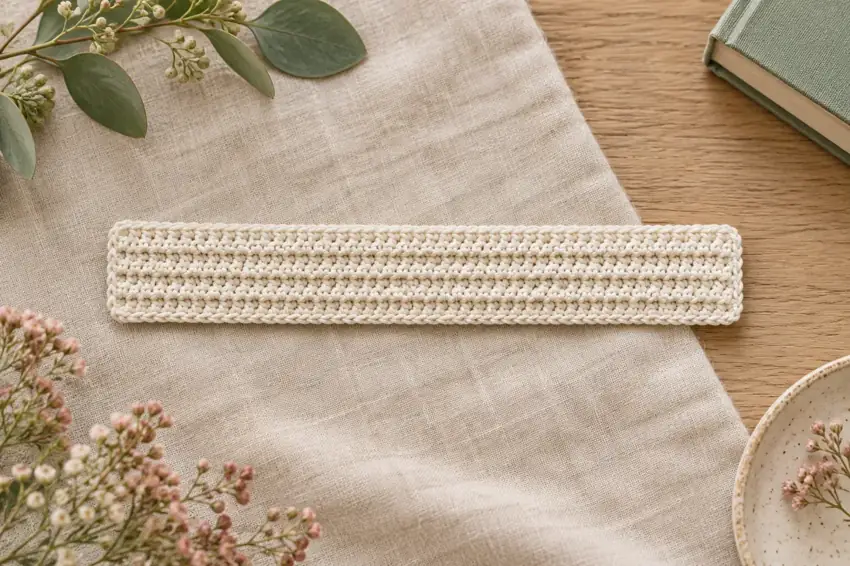
Choose a bookmark to explore a thinner textured fabric
The ribbed bookmark is worked along its length. It has many stitches in each row but relatively few rows. Back-loop-only single crochet creates the texture while the stitch count stays the same. A marker at each end is helpful when a long edge seems to hide its last stitch.
A bookmark also asks a question that a photograph cannot answer: is this fabric thin and flexible enough to sit comfortably between pages? Yarn category alone does not settle that. Sample your chosen cotton, inspect its thickness and avoid adding bulky knots or decorations to the version described in the pattern.
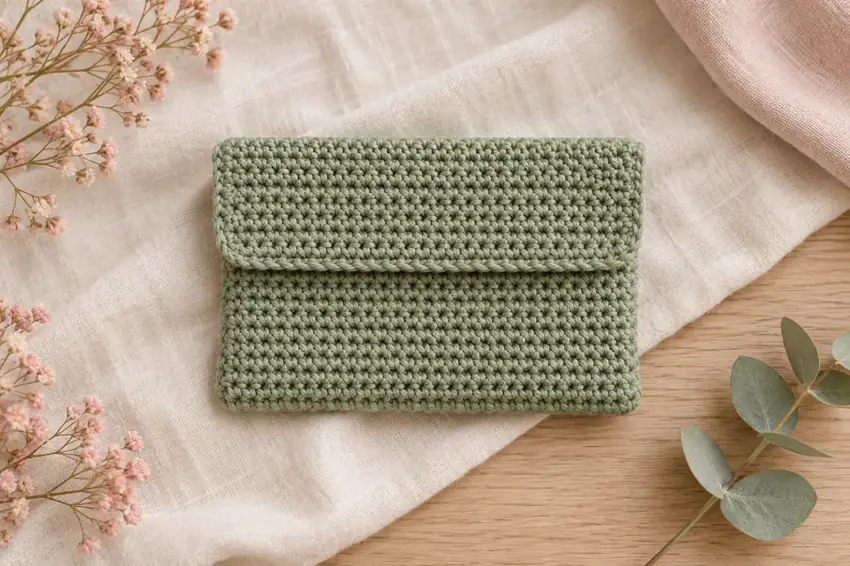
Choose a pouch when you are ready for assembly
The envelope pouch adds a construction step after the rectangle is finished. Three equal row sections become the pocket front, pocket back and flap. The side seams hold the two pocket layers together while the top and flap remain free.
Before sewing, lay the panel flat and identify both fold boundaries. Matching the row ends matters more than pulling a seam tightly. The pouch has a simple resting flap rather than a secure fastening, so choose its use after checking the actual size and closure.
Keep one useful note for your next project
Write down the yarn, hook, final stitch count and relaxed measurements. If you changed something, note what changed and why. These details make your next attempt more predictable than a general memory that the fabric felt too tight or too loose.
All current Cozy Pattern Lane project recipes are written drafts awaiting maker testing. Use their published status, gauge assumptions and construction notes when deciding whether a project suits your experience. The beginner lessons and free checklist remain available separately whenever you need a refresher.