Crochet abbreviations, without the guesswork
A practical guide to common US crochet terms, repeats and the small notes that change how a pattern works.
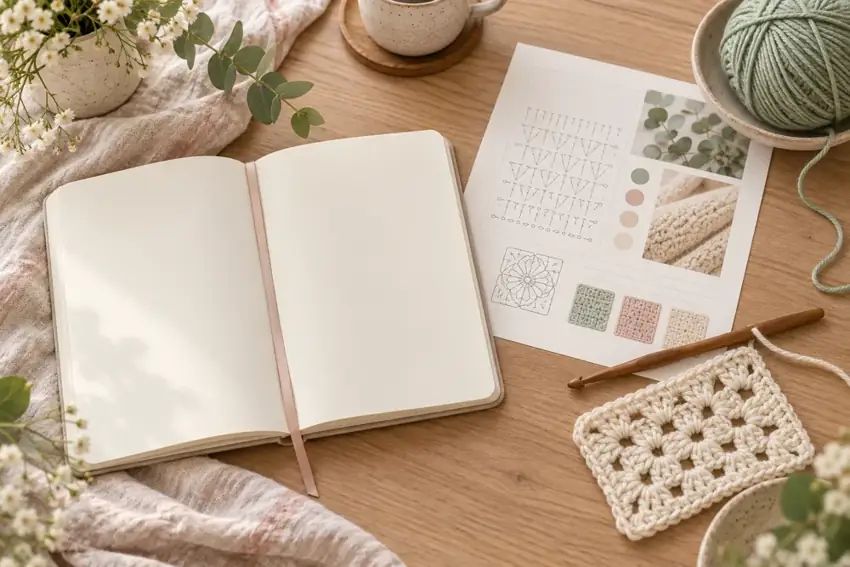
Start with the terminology, not the hook
Before you make the first chain, find out whether the instructions use US or UK crochet terms. The same stitch name can describe different stitches in the two systems. This guide uses US terms throughout. In particular, US single crochet is commonly called double crochet in UK terminology. A US double crochet is commonly called a treble in UK terminology. Do not combine the two systems within one set of instructions.
Keep the pattern’s own abbreviation key nearby. Designers sometimes introduce a special abbreviation or use a familiar shorthand in a particular way. Their definitions and stitch instructions are the place to start.
The abbreviations you will see most often
Read these aloud in ordinary language while you learn. Soon the abbreviations will feel more like short instructions than a code.
- ch: chain. Make the number of chains specified.
- sl st: slip stitch. Often used for joining or moving without adding much height.
- sc: single crochet.
- hdc: half double crochet.
- dc: double crochet.
- tr: treble crochet.
- st / sts: stitch / stitches.
- yo: yarn over. Bring the working yarn over your hook as the instructions require.
- rep: repeat.
- sk: skip the stated stitch or space.
- sp: space, such as an opening beneath a chain.
- RS / WS: right side / wrong side of the fabric.
- BLO / FLO: back loop only / front loop only. Work into the specified loop rather than both top loops.
Understand increases and decreases
An increase adds stitches; a decrease reduces them. “Inc” is not a complete universal stitch instruction. A pattern might define an increase as two single crochets in one stitch, or use another stitch combination. Likewise, “dec” needs a definition. For example, sc2tog means single crochet two stitches together. Check the special-stitch section before substituting a technique.
When a pattern says “2 sc in next st,” both single crochets go into the same stitch. When it says “sc in next 2 sts,” make one single crochet in each of two stitches. Those instructions use the same numbers but produce different results.
Read repeats as a complete unit
Asterisks, parentheses and brackets often mark repeated instructions. Their meaning depends on the pattern’s wording. For “*sc in next st, 2 sc in next st; rep from * three more times,” you work the marked pair once, then three additional times: four repeats in total.
Numbers at the end of a row commonly show the stitch count, but parentheses can also group instructions or separate sizes. Look at the pattern notes to identify which job the punctuation is doing. Mark your chosen size before starting a multi-size pattern.
Keep a small reference beside your work
Write down unfamiliar terms before you begin, along with whether the turning chain counts as a stitch. Read one whole row before working it. Then check the stated stitch count at the end. If a term is missing from the key or a repeat does not fit the count, pause and seek clarification rather than inventing an interpretation. A two-minute check is easier than undoing several rows.