Your next crochet project: eight ways to go beyond the basics
Compare flat rows, granny motifs, round shaping and panel assembly to choose a project you will enjoy making next.
Choose the construction before choosing the color
A lovely cover can start an idea, but the making experience depends on the construction. Our Beyond the Basics collection offers four easy projects and four intermediate projects. The easy designs keep the main work in straightforward rows or a small repeated motif. Intermediate designs ask for more decisions about joins, shaping or assembly.
All eight are original written drafts with target gauge and complete instructions. They still await physical maker testing. Treat covers as illustrations of the design, and use the written recipe and construction plan for counts and assembly.
For a steady repeat: the runner or scarf
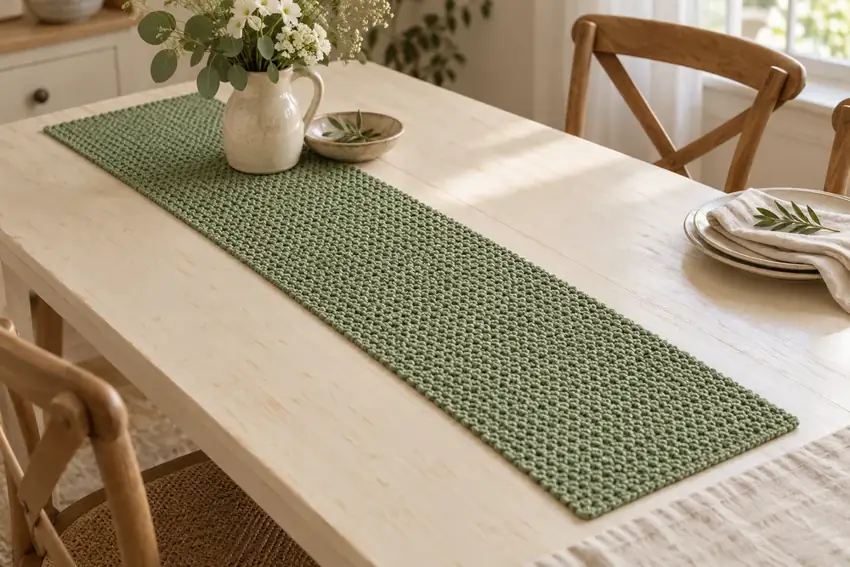
The moss-stitch table runner works a narrow rectangle in short rows. Its texture comes from single crochet and chain spaces, so recognizing where to place the next stitch matters more than collecting new stitch names. It is a useful choice if you enjoy a quiet repeat and want a piece for the table.
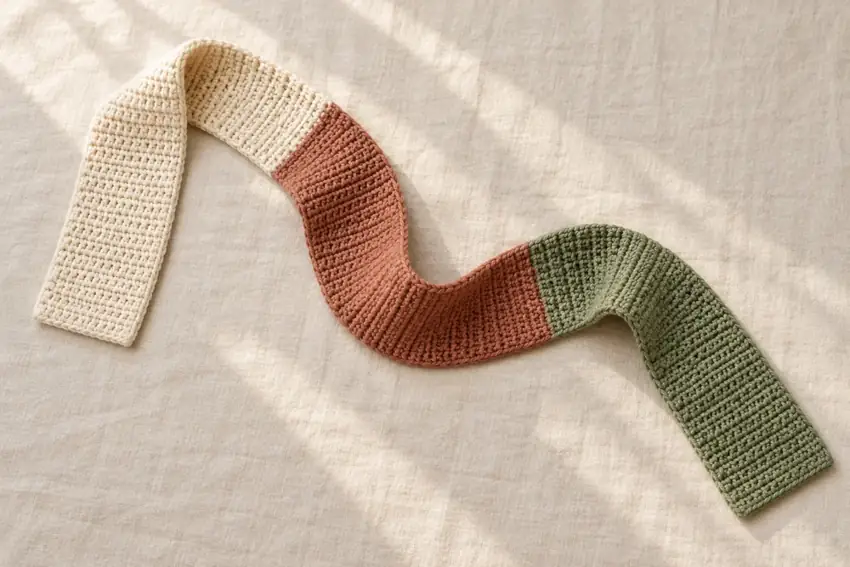
The three-block scarf uses half double crochet and three equal sections along its length. It introduces a longer project without increasing, decreasing or fitting a garment. Check row gauge before starting: small differences add up over a long scarf.
For a short project: a headband or coasters
The ribbed headband starts as a strip and closes with a straight seam. Its fit depends on the measured strip, stretch and seam; the recipe explains checking the loop before securing the ends. It has no twist or decorative knot.
The two-tone coasters introduce a classic granny square in four rounds. Try them before a twelve-round cushion front or tote panel. Count corner spaces, distinguish corner groups from side groups, and notice how the square gains a repeat along each side. A coaster is a place to learn that construction on a small scale.
For a coordinated room: cushion and throw
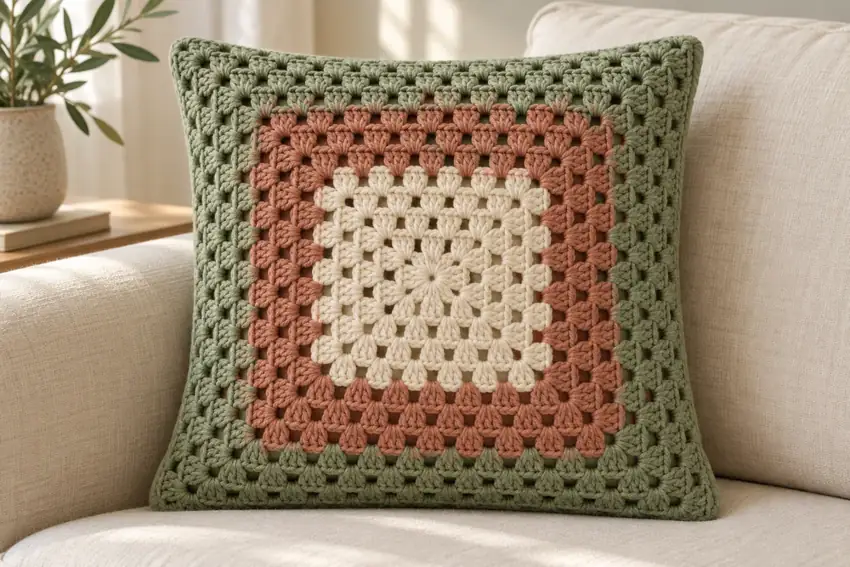
The envelope cushion has one large granny-square front, rather than a patchwork of little squares. Two single crochet panels overlap on the back so an insert can be removed. Read the assembly section before starting the back panels; the overlap is part of the design.
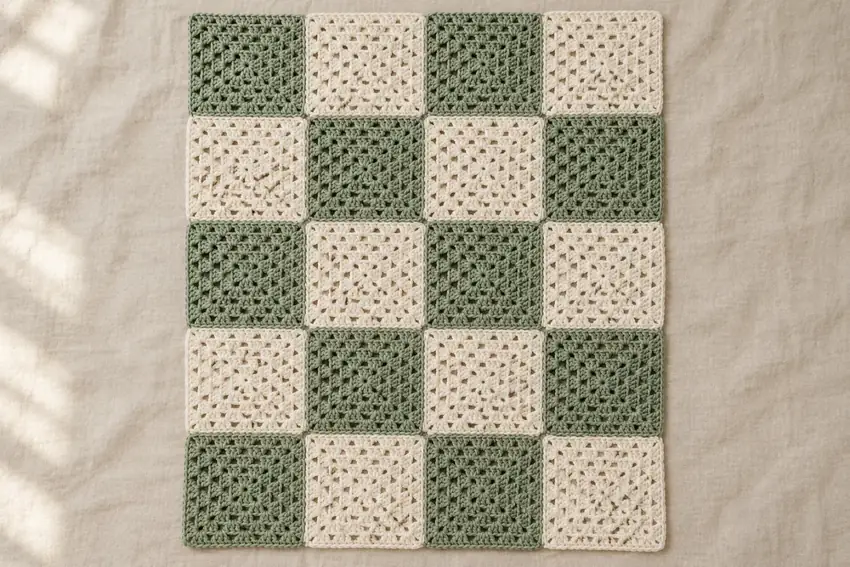
The checkerboard throw uses twenty individual granny squares arranged in four columns and five rows. Ten ivory and ten sage squares alternate. It is a bigger commitment in repeated motifs, tails and seams. Make and measure one square before calculating the yarn for the whole blanket, and lay out all twenty before joining them.
For a change of shape: basket or tote
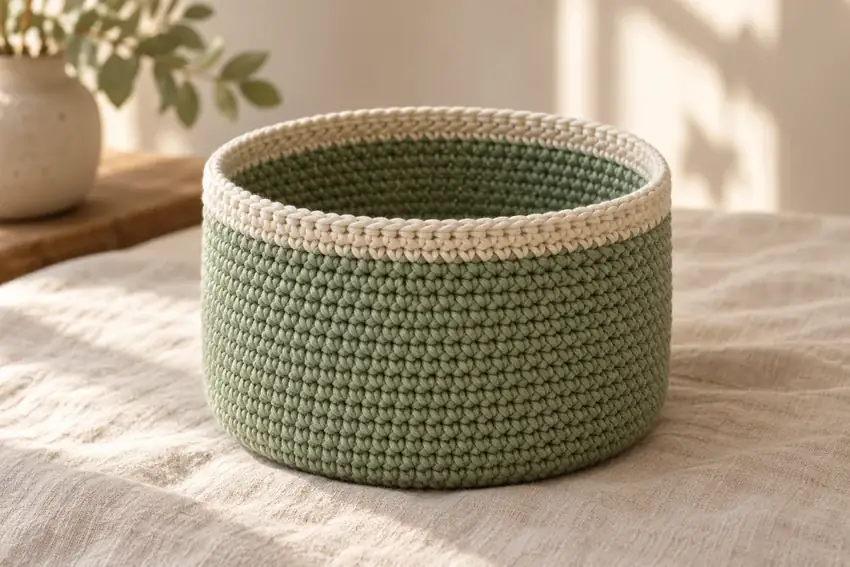
The round basket introduces a circular base, regular increases and a transition into straight walls. A marker tracks the start of the spiral. The cream rim is a color change across the last three rounds, rather than a separate sewn band. The fabric must be firm enough to hold the intended shape; hook and yarn choices will affect that.
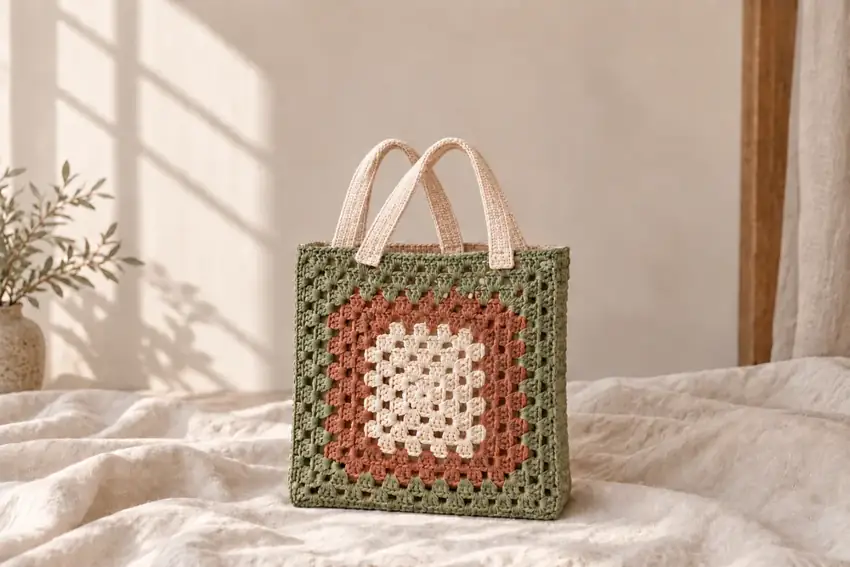
The granny tote uses two square panels joined along the sides and bottom, with two flat crochet straps at the opening. There is no gusset or lining in the written design. It is a project for practicing matched panels, symmetrical strap placement and secure joins. Yarn can stretch in use, so do not assume a pictured shape proves a load capacity.
Make the next choice easier
Read the materials, gauge, stitch notes and finishing steps of a candidate before buying yarn. Choose a technique you already know plus a manageable new skill. Keep a small sample and write down your hook, gauge, changes and final measurements.
After a small granny motif, you might move to the tote or cushion. After the runner, try a longer scarf or the circular basket. Related-project links on each recipe connect you to another make, while the beginner hub stays available whenever you need a refresher.